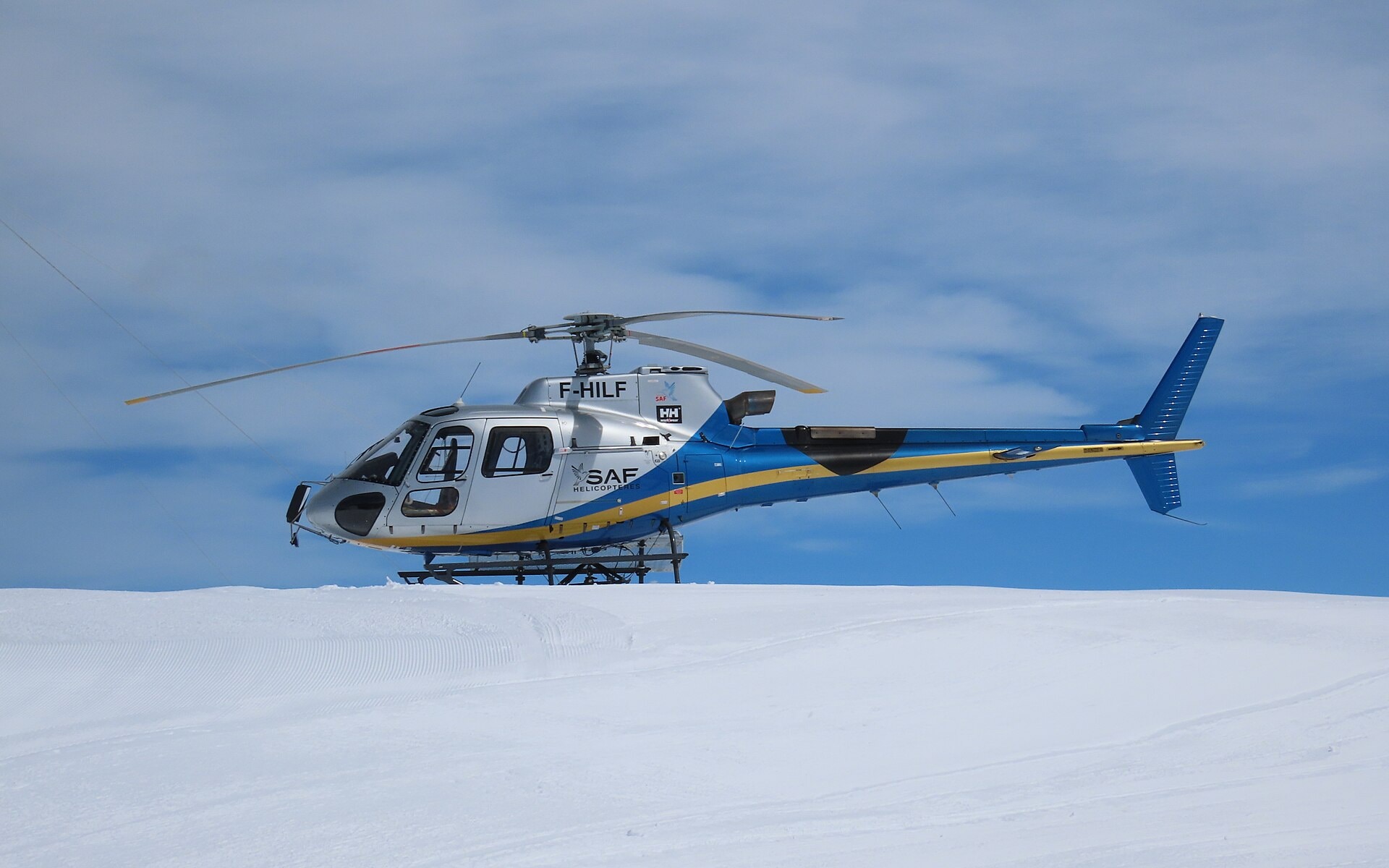
There is one thing skiers almost always discover after their first accident: the rescue bill. In France, rescue on a ski area is carried out by the resort’s patrollers and charged to the rescued skier — the law allows municipalities to charge the costs to the beneficiaries, and every resort does. Outside the area, in the mountains, State rescue is free. The boundary is the perimeter of the ski area, not the piste.
What a rescue costs
Each resort publishes its fee schedule, by zone and by means. Orders of magnitude, from last season: a sled rescue on the snow front, €100 to €200; on the rest of the area, €300 to €600; in a remote zone or off-piste reachable by the lifts, up to €800. A helicopter rescue, billed by the flight minute, €1,500 to €4,000. Then the ambulance to hospital, €200 to €500, and the treatment itself.
These are the costs of the rescue, not of the injury. A knee sprain rescued by sled and taken by ambulance costs, before any treatment, between €500 and €1,000.
Carré Neige: €3 a day
The insurance sold with the pass — Carré Neige in most French resorts, or an equivalent contract under the area’s name — costs about €3 a day per person, €15 to €20 a week. It covers:
- rescue costs on piste and off-piste reachable by the lifts, with no real ceiling in practice;
- transport to the nearest hospital;
- refund of the pass and of unused lessons, pro rata, on a medical certificate;
- often interrupted gear rental, and repatriation;
- third-party liability if you injure someone.
It does not cover medical costs — that is social security and your top-up insurance —, nor broken or stolen gear, nor touring outside the area, nor accidents under the influence of alcohol.
For most skiers it is the right buy: €3 a day against a risk of €500 to €4,000. It is taken at the counter with the pass, or online with a pass booked ahead.
What you may already have
The bank card. Premium cards include assistance abroad and, for some, cover of mountain rescue costs — provided you paid the pass or the stay with the card. Ceilings run from €1,500 to €10,000 depending on the card, and off-piste is often excluded. It is real cover, to be checked in the conditions before giving up Carré Neige.
Home insurance or an accident policy. They cover third-party liability and sometimes disability, rarely rescue costs.
A club licence (FFS, FFCAM) includes insurance that covers rescue, including outside the area for the FFCAM — the ski tourers’ insurance.
Top-up health insurance covers treatment; some offer a winter sports option that includes rescue.
Off-piste and touring
Carré Neige covers off-piste reachable by the lifts. A skier rescued on a marked off-piste itinerary, or in a bowl next to the piste, is covered. A ski tourer who set off from the valley, rescued by the PGHM, is rescued free — except in a few départements and for certain behaviour, where rescue may be charged. For touring, the FFCAM licence or a specific insurance remains the right reflex, for repatriation and search.
The day it happens
On piste: do not move the injured person, plant crossed skis uphill, call the piste number printed on the map and the pass — or 112. The patrollers arrive by sled or snowmobile, assess, and decide the means of evacuation. You will be given a rescue form: that is what to send to the insurer, with the medical certificate and the pass. The refund of the unused pass needs the same certificate.
On our pages, each resort links to its official website, where the rescue fee schedule is published — reading it before the week takes two minutes and avoids the surprise.