Two mistakes show up every week on the pistes. The skier in light sunglasses whose eyes sting and water by 3 pm: that is keratitis, a UV burn of the cornea, painful, reversible in a few days. And the skier in very dark goggles, on a foggy day, who can no longer tell a bump from a flat and falls on a feature they never saw. Both have the same problem: one lens for all weathers.
Why altitude changes everything
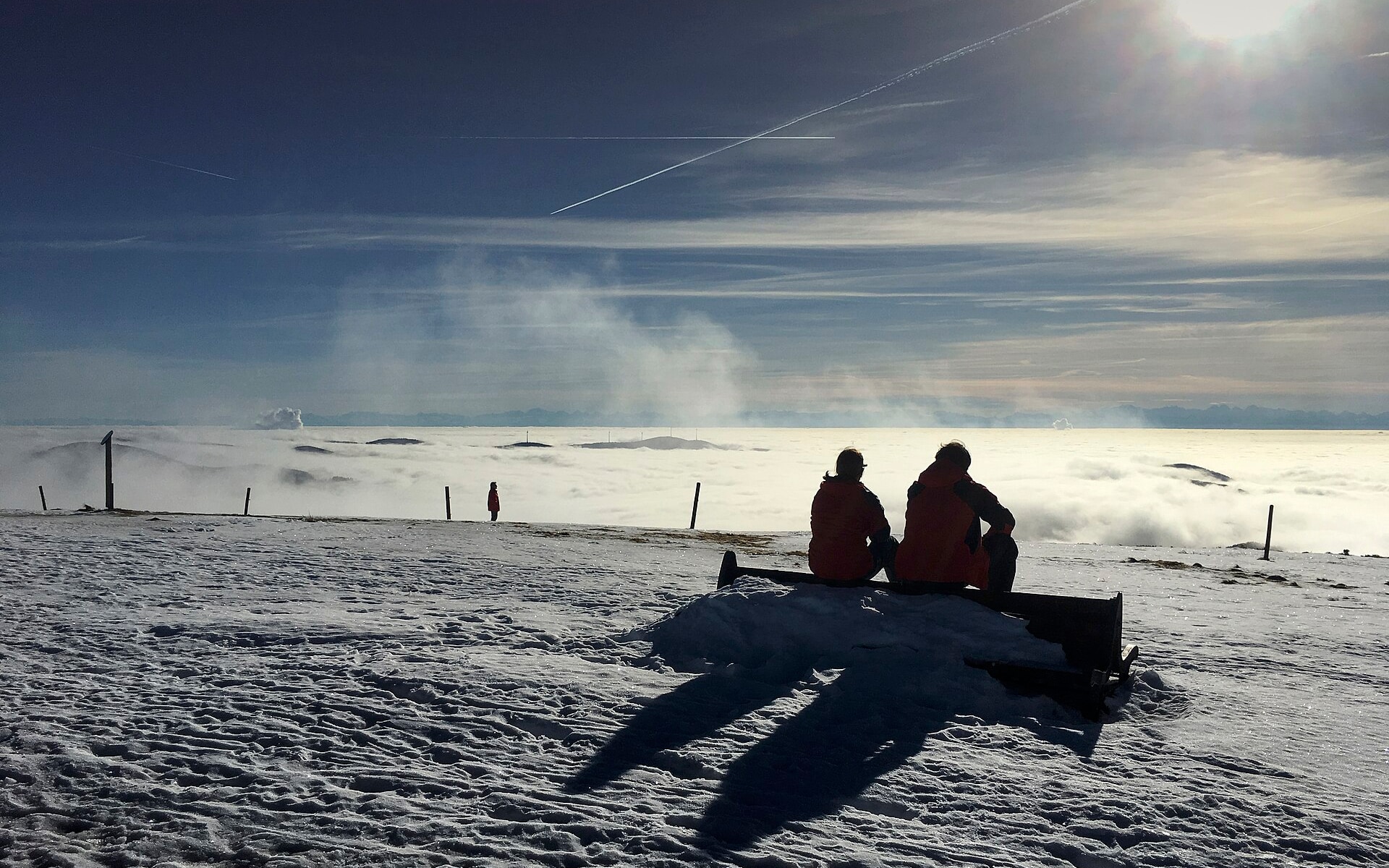
The atmosphere filters ultraviolet; there is less of it higher up. UV radiation increases by about 10 % per 1,000 m of altitude. And snow reflects up to 80 % of the UV that hits it, against 10 % for grass or sand: at 2,500 m on a glacier, you get UV from above and from below. A day without protection is enough to burn the cornea; years without protection encourage cataracts.
UV protection does not depend on tint: a clear lens can filter 100 % of UV, a poor-quality dark lens may not. All goggles and sunglasses sold in Europe under the EN 174 and EN ISO 12312-1 standards filter UV entirely. What changes with the tint is visible light.
The categories: 0 to 4
The label carries a filter category, which says what share of visible light gets through.
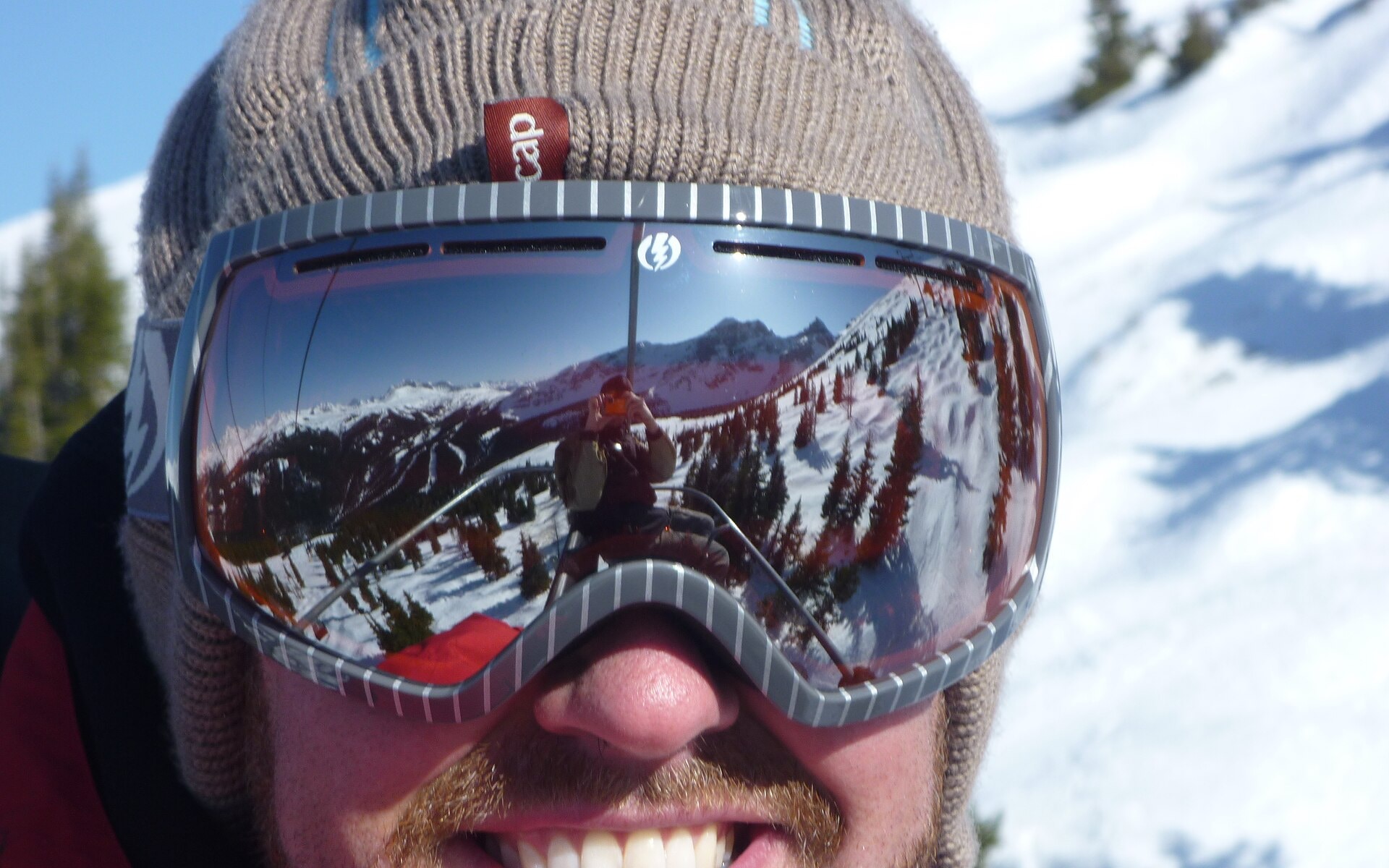
Category 0 — 80 to 100 % of light: clear or pale yellow lens, for night skiing and thick fog. Category 1 — 43 to 80 %: overcast, fog, late in the day; the yellow, orange and rose lenses of this category boost the contrast of the terrain. Category 2 — 18 to 43 %: changeable sky, the compromise of a single lens. Category 3 — 8 to 18 %: full sun, the category of most goggles sold. Category 4 — 3 to 8 %: glacier, high altitude, very strong sun — and banned for driving, you see nothing in the shade.
Fog is the case that deceives: the white sky seems bright, but the relief of the snow disappears. You then need a light, coloured lens — yellow, orange, rose — that lets light through and accentuates the shadows. A dark lens makes everything worse.
Two lenses, or a variable lens
The solution of most regular skiers: goggles with an interchangeable lens, a category 3 lens for sun and a category 1 lens for bad weather, swapped in thirty seconds by magnets or clips. The spare lens travels in its pouch, in the jacket pocket.
The alternative: a photochromic lens, which darkens and lightens with the light, from category 1 to 3 in a few dozen seconds. Dearer, less reactive in deep cold, but a single lens for the week.
Polarised lenses remove glare on wet snow; they also hide ice patches, which shine — useful in spring, debatable in January.
Choosing goggles
With the helmet. The goggles must hug the helmet’s rim without leaving bare forehead or pressing on the vents. Try both together.
Field of view. A wide spherical or cylindrical lens; narrow goggles cut peripheral vision, the vision that sees the skier next to you coming.
Ventilation and anti-fog. Vented foam around the rim, a double lens — two layers separated by air, like double glazing — and an inner anti-fog coating you never touch with a glove.
Glasses wearers. “OTG” (over the glasses) goggles, deeper, accept prescription glasses underneath. Contact lenses avoid the problem.
Care
Air-dry, never on the radiator or in a car in the sun. Store in the microfibre pouch, lens up. Clean the outside with clear water and microfibre; never wipe the inside, whose anti-fog coating wears off at the first rub. A scratched lens gets replaced; the goggles are kept.