Three different figures hide behind the words “high resort”, and they are not worth the same. There is the altitude of the village, where you sleep and put your boots on: it decides whether you ski back to the door or take a shuttle in March. There is the altitude of the top of the ski area, the brochure figure, which says how high the lifts go. And there is the altitude where you will actually spend your days — somewhere in between, usually closer to the bottom.
This article ranks resorts by the first two, using the figures on our resort pages, then says what altitude really changes.
The highest villages: sleeping above 2,000 metres
Four French resorts put their guests to bed at 2,100 metres or higher.
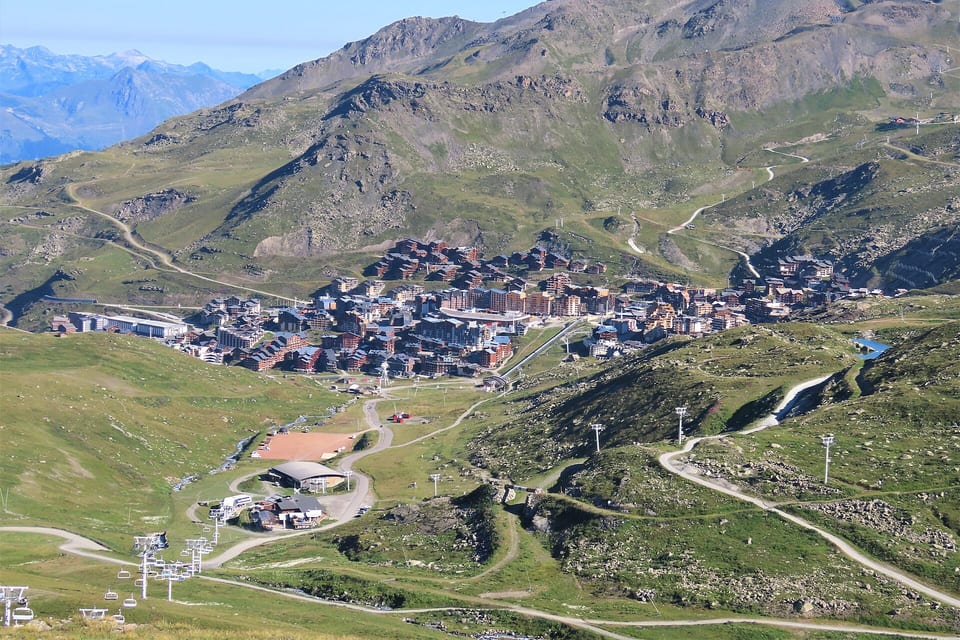
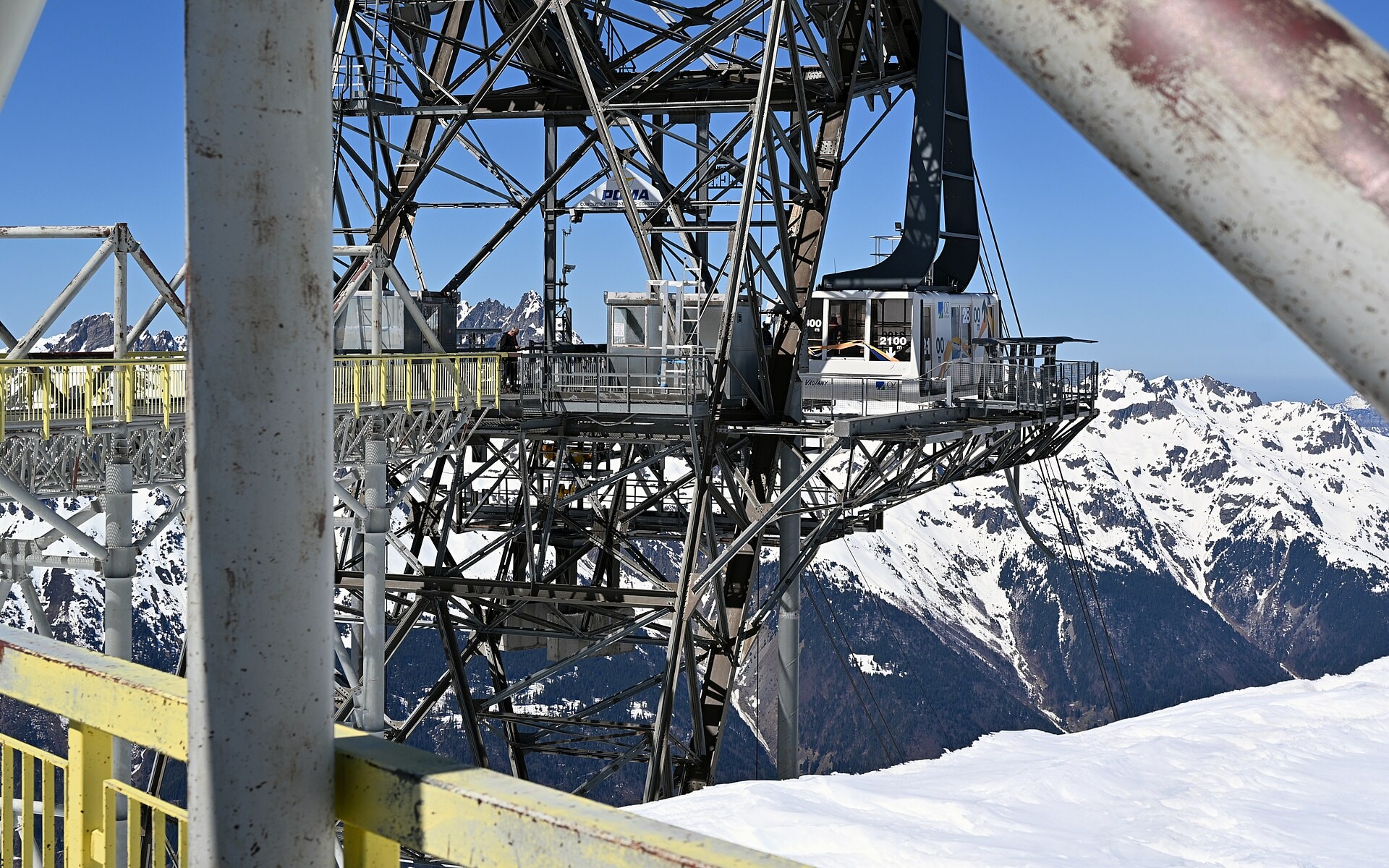
Val Thorens, at 2,300 m, is the highest in Europe. Its ski area tops out at 3,001 m at the Cime de Caron, and the cable car of the same name — 866 m of vertical, 1,530 people an hour according to the national register — remains one of the great moments of the 3 Vallées. At this altitude snowmaking is almost never needed in December: the neighbouring Météo-France station at Orelle records an average of 131 days a winter with at least 30 cm on the ground over seventeen complete winters.
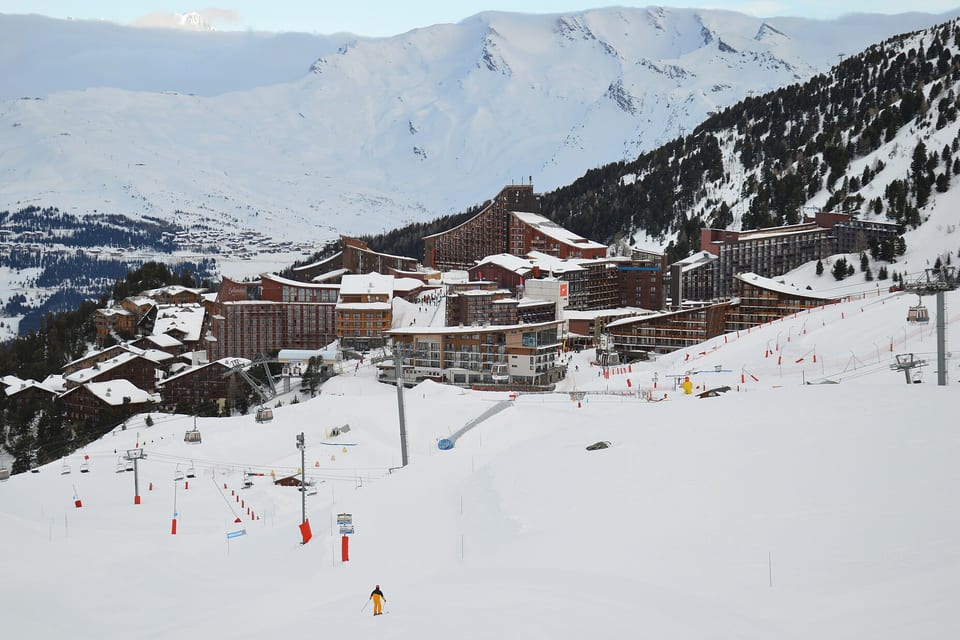
Arc 2000, at 2,145 m, and Aime 2000, at 2,100 m, are the two modern versions of the purpose-built resort: you sleep inside the ski area, and the first chairlift is at the door. Les Arcs climb to 3,166 m at the Aiguille Rouge; Aime 2000, on La Plagne, to 3,250 m via the Bellecôte glacier.
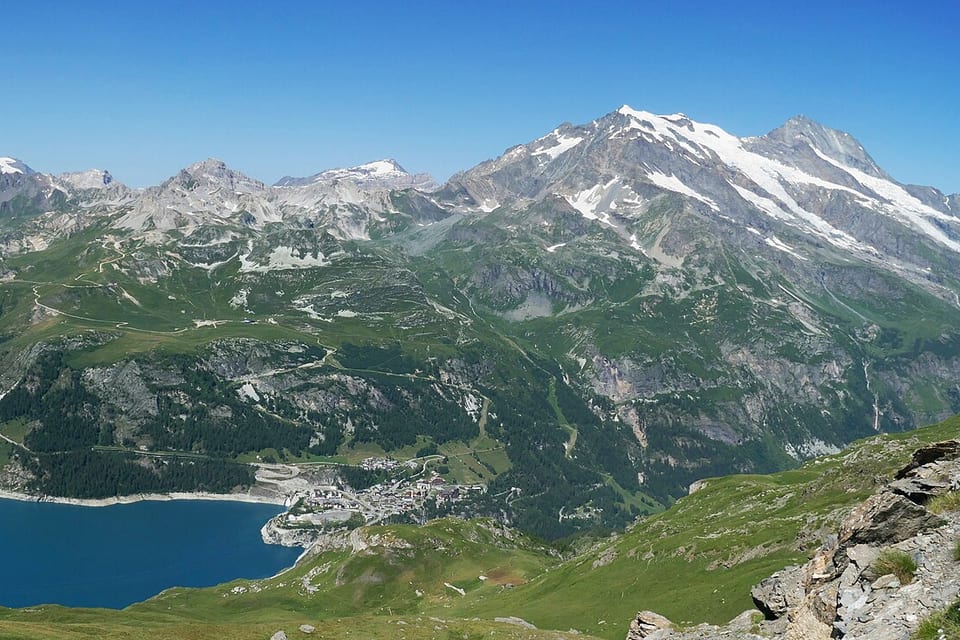
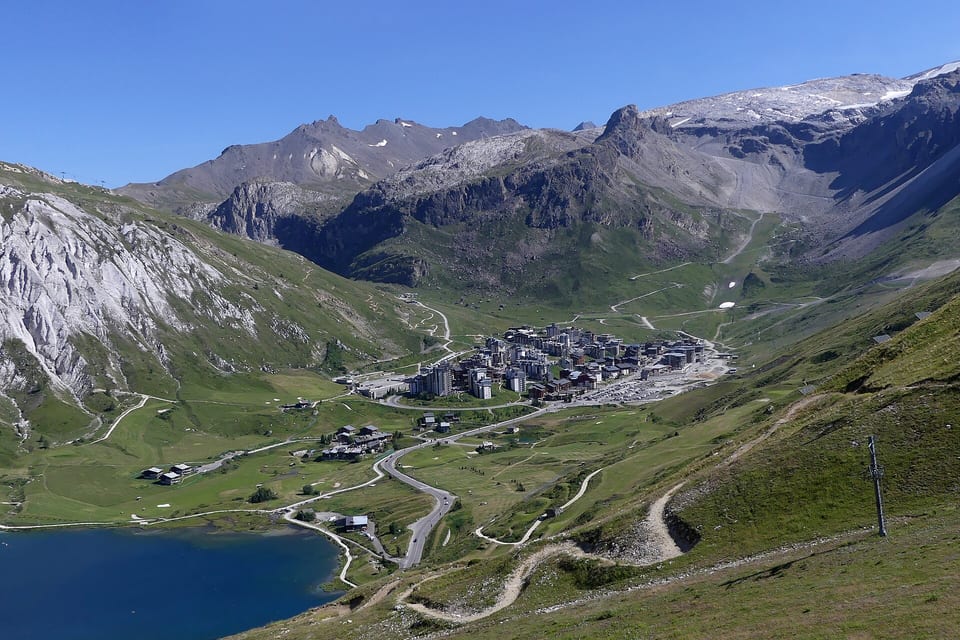
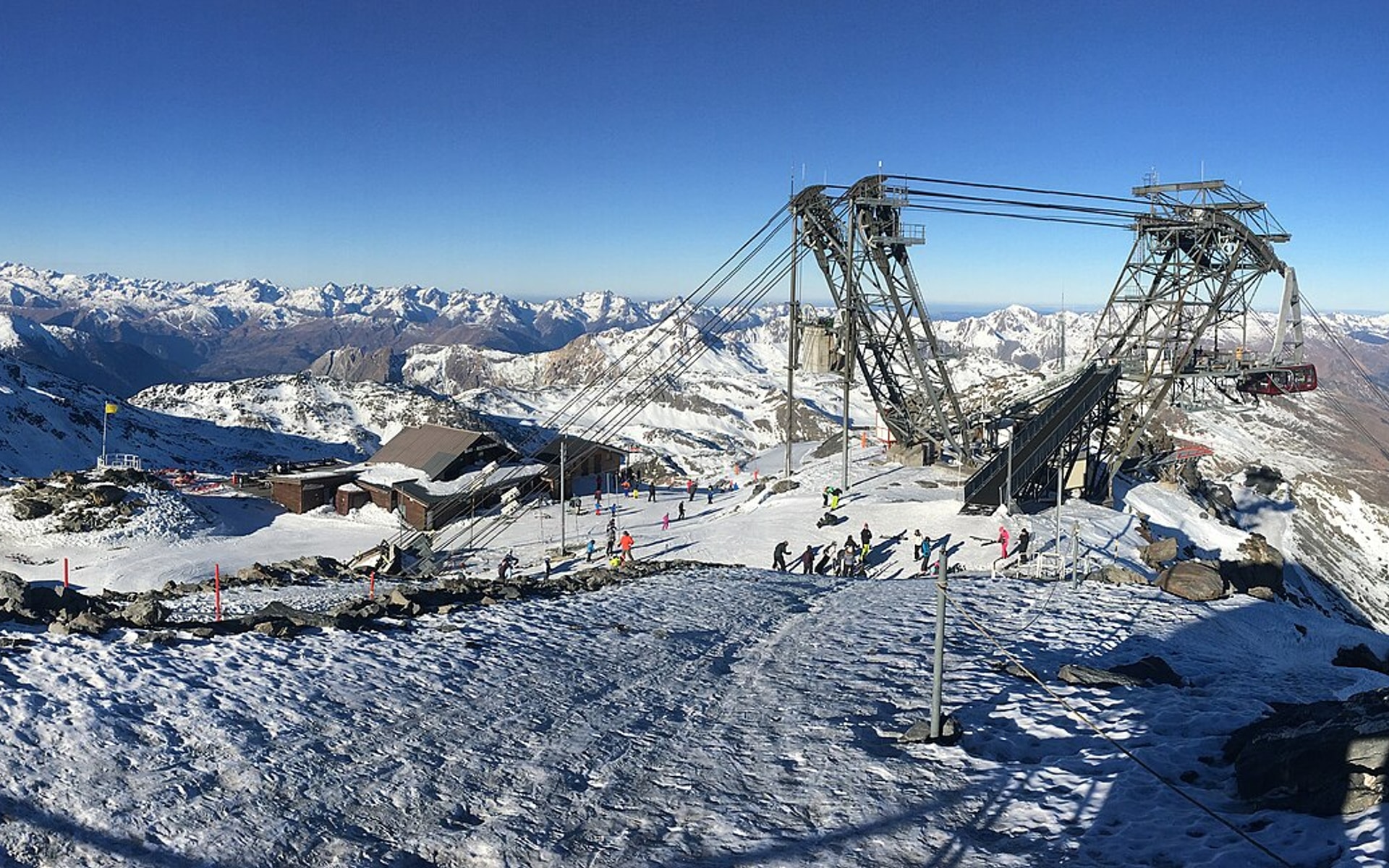
Tignes houses its visitors at 2,100 m at Le Lac and Le Lavachet, and slightly higher at Val Claret, 2,110 m. The area shared with Val-d’Isère reaches 3,455 m at the Grande Motte — the highest skiable point in France served by a cable car, with a top station at 3,451 m.
The highest summits: how far the lifts go
The national lift register, kept by the STRMTG, records the top-station altitude of every authorised lift. Sorting it gives a ranking that owes nothing to brochures.
| Resort | Lift | Top station |
|---|---|---|
| Chamonix-Mont-Blanc | Panoramic Mont-Blanc gondola | 3,787 m |
| Les Deux Alpes | Dôme de la Lauze drag lift | 3,642 m |
| La Grave | Dôme drag lift | 3,532 m |
| Tignes | Grande Motte cable car | 3,451 m |
| Alpe d’Huez | Pic Blanc cable car | 3,318 m |
| Val Thorens | Cime Caron cable car | 3,186 m |
| La Plagne | Glacier chairlift | 3,167 m |
Two reading notes. Chamonix’s Panoramic gondola links the Aiguille du Midi to Pointe Helbronner: you look, you do not ski. And the two Dôme drag lifts, at Les Deux Alpes and La Grave, are glacier lifts, open more often in summer than in winter. The highest skiable point in France in midwinter is indeed the Grande Motte, at Tignes.
What altitude changes, and what it does not
It changes the length of the season. Between an area that tops out at 1,800 m and one that reaches 3,000 m, it is not the amount of snow that falls that differs most — it is how much of it stays. In our records, resorts whose weather station is above 2,000 m count between 125 and 134 days a winter with at least 30 cm on the ground, against fewer than 60 for most mid-mountain stations.
It changes the cold, and so the snow quality at midday: at 2,500 m the snow stays cold and light where, 800 m lower, it turns heavy by noon in March.
It does not change everything. Slope aspect matters as much late in the season: the resort pages measure, from the fall line of each run, the share of north-, east-, south- and west-facing slopes — Gourette, in the Pyrenees, skis 89 % north-facing and keeps its snow well beyond what its altitude would suggest. And the wind of high areas closes lifts the snow would have left open: the Grande Motte cable car and the Cime Caron do not run on every stormy day.
High altitude and a small budget are not exclusive
The highest resorts are also among the most expensive — €78 for an adult day pass at Tignes and Val-d’Isère for 2026-2027, €70 at Les Menuires, on the official price lists read in September. But altitude is also found away from the big names. Bonneval-sur-Arc, with a village at 1,815 m in the Haute-Maurienne, climbs to 2,950 m, and the neighbouring Météo-France station counts 131 days at 30 cm or more a winter. In the Massif Central, Super-Besse skis between 1,350 and 1,850 m on the flanks of the Sancy, for a €43.50 day pass.
The table below is from our guide to high-altitude resorts: village above 1,500 m, ski area above 2,500 m. It is computed live from the resort pages.