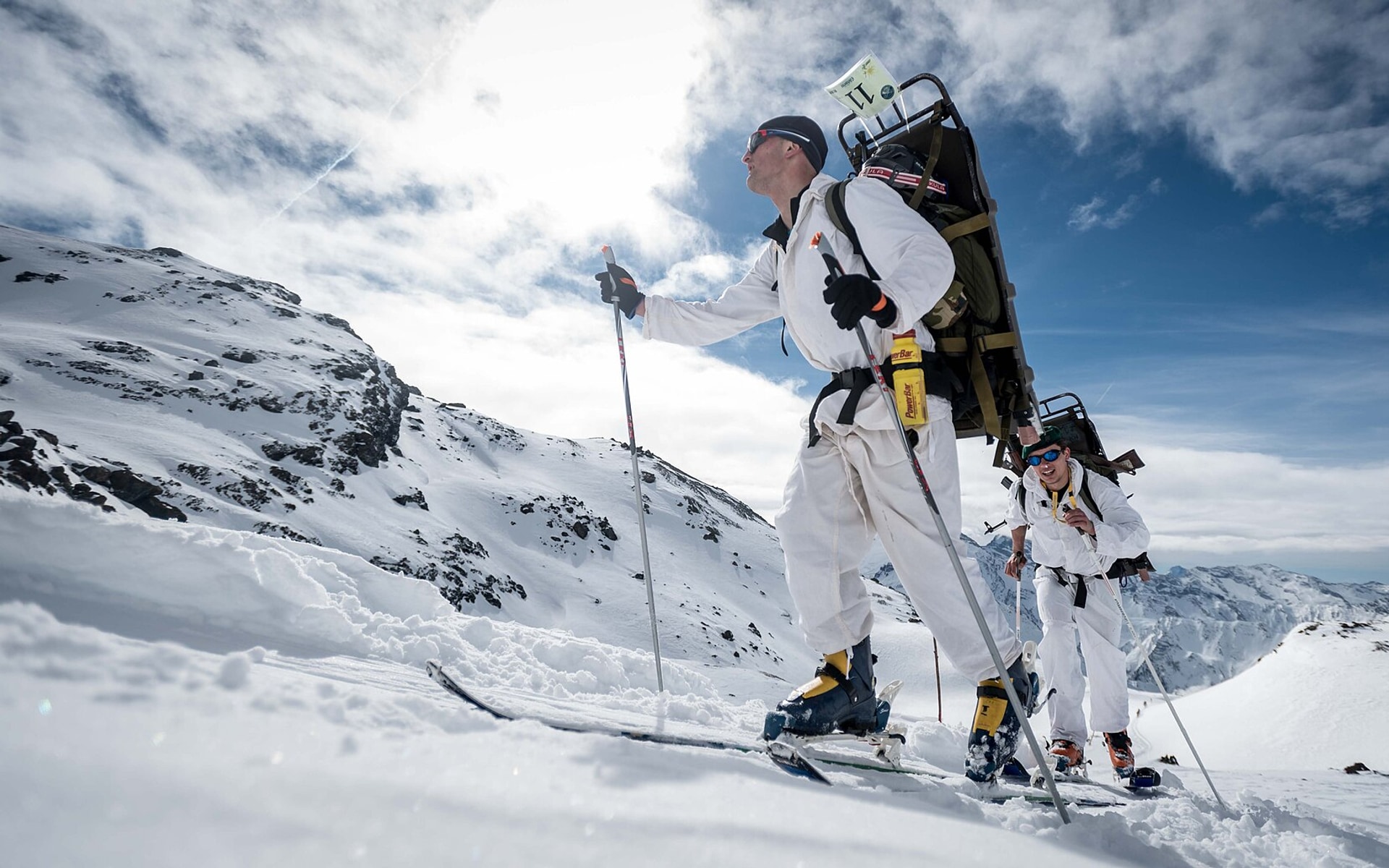
Ski touring has changed its public in ten years: what was a mountaineers’ pursuit has become, at the edge of resorts, an endurance sport open to anyone who can stand on skis. What has not changed is the mountain. This article says what you need to start, how to read a grade, and where to find described routes — our pages list them for 323 resorts.
The gear: what changes from alpine skiing
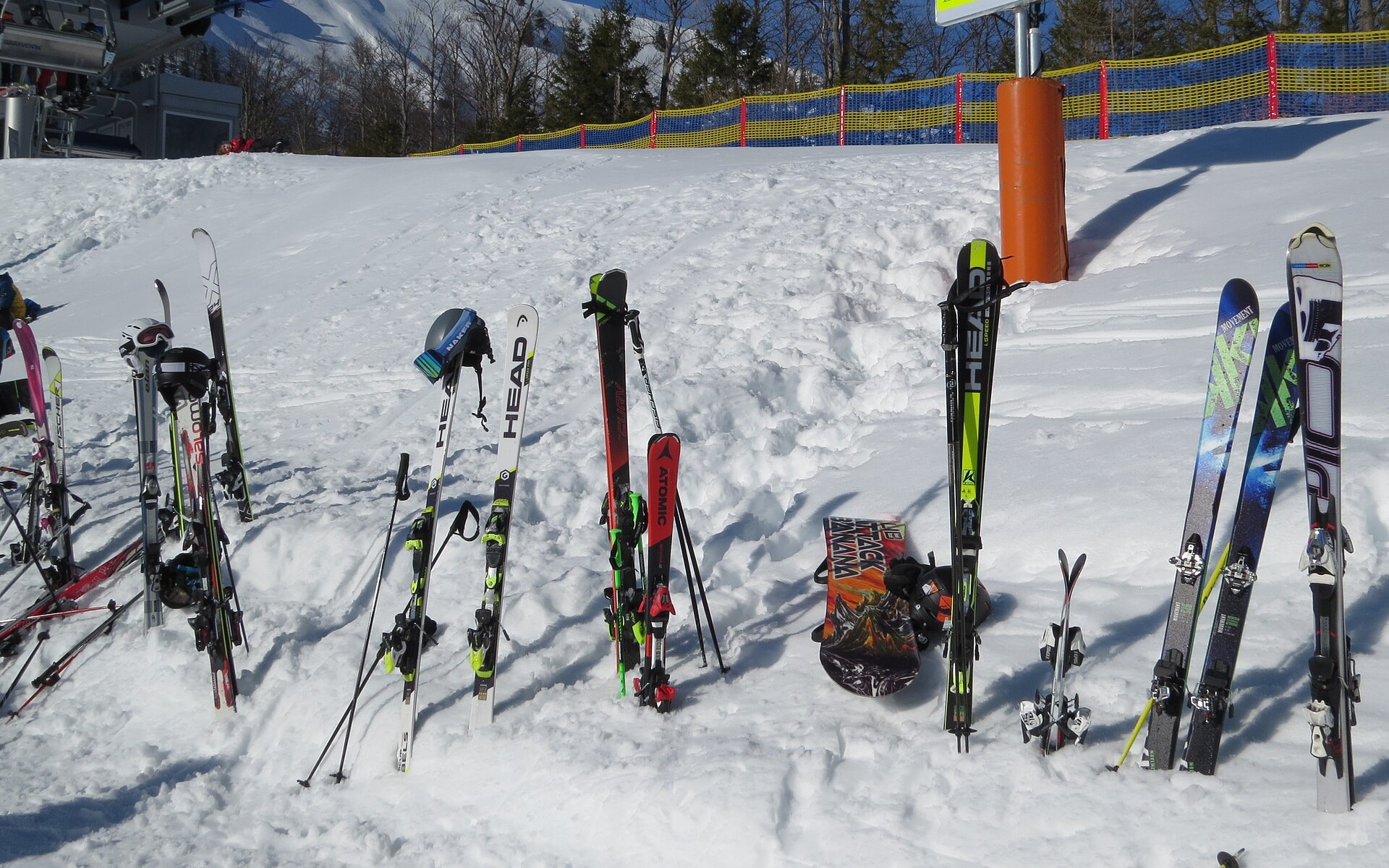
Bindings. They free the heel for the climb and lock it for the descent. Two families: pin bindings (tech bindings), light, which require compatible boots; and frame or hybrid bindings, heavier, which accept ordinary alpine boots and release like an alpine binding. To start by renting, the second family is the safe choice.
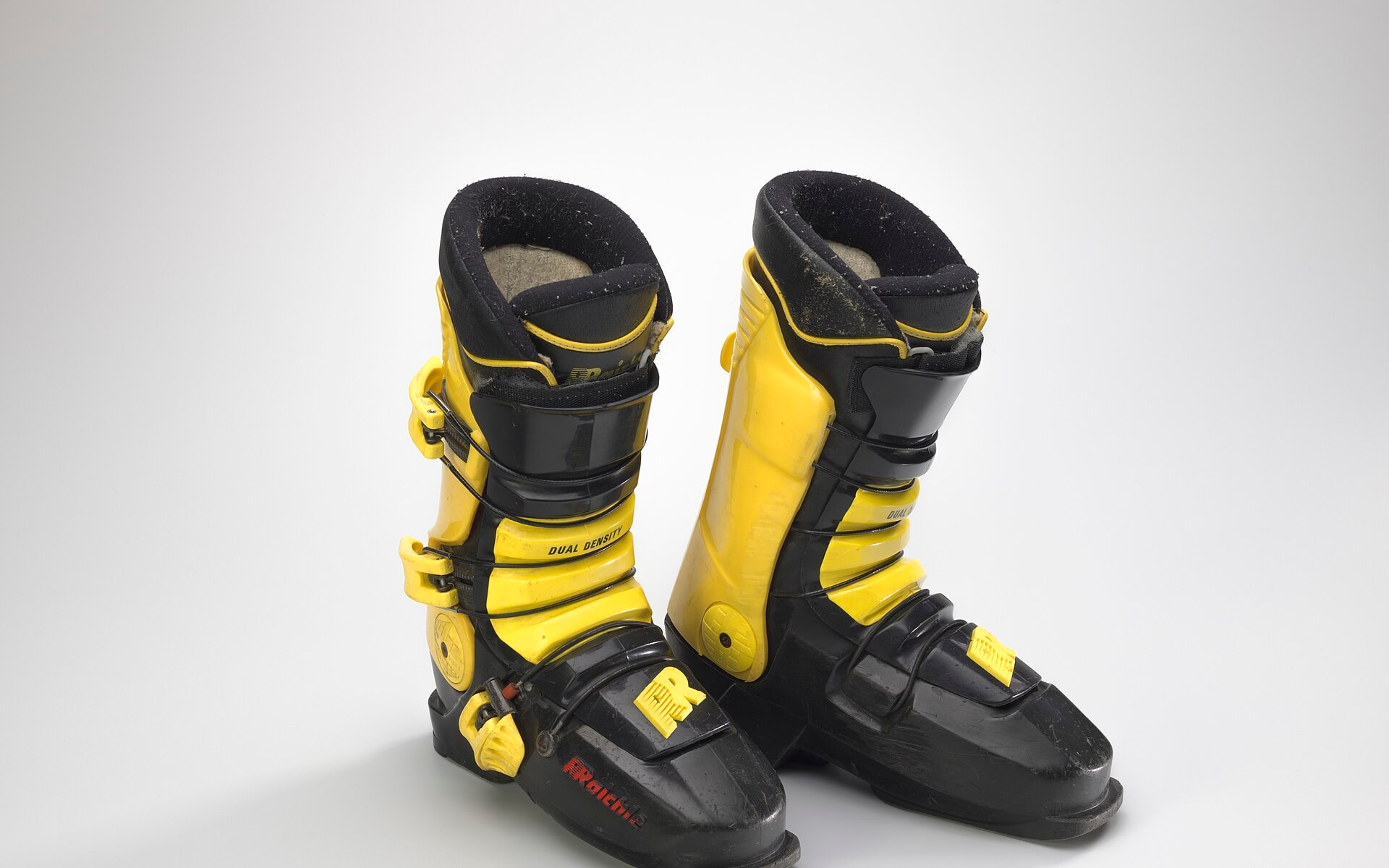
Boots. A touring boot has a walk mode that frees the cuff, and a lugged sole. You can start with alpine boots on hybrid bindings — at the cost of a harder climb.
Skins. Strips of mohair or synthetic stuck under the ski, which glide forward and grip backward. They are cut to the ski’s shape, stored folded glue to glue, and dried away from the radiator.
The safety trio. Avalanche transceiver worn under the jacket and switched on, shovel and probe in the pack. Without exception, including on marked tracks in resorts — a closed piste, a neighbouring off-piste slope, and the ascent track crosses slopes that are not secured.
Reading a grade
The routes our pages list come from the Camptocamp guidebook, and each carries several grades.
The ski grade, S1 to S7, describes the technical difficulty of the descent. S1 is a gentle slope; S2 is a blue run; S3 a sustained red, with sections at 30-35°; S4, from 35-40°, is a slope where a fall no longer stops by itself; beyond begins steep skiing. A beginner stays in S2 and S3 for their whole first winter.
Exposure, E1 to E4, describes the consequences of a fall: E1, you slide and stop; E2, a fall may be serious because of obstacles; E3, it probably will be; E4, a rock band or a drop. An S3 E1 descent and an S3 E3 descent are not the same outing.
The vertical gain says the effort: 600 to 800 m is a reasonable first outing, 1,200 m a fine day, 1,800 m a mountaineer’s day.
Where to make your first climbs
On a marked track in a resort. More and more resorts mark an ascent track beside a piste, with a start, a finish and sometimes a warm room. There you learn the kick turn, skin adjustment and pace without the risk of wild terrain. Our pages show, for each resort, the kilometres of marked off-piste itineraries recorded on the map.
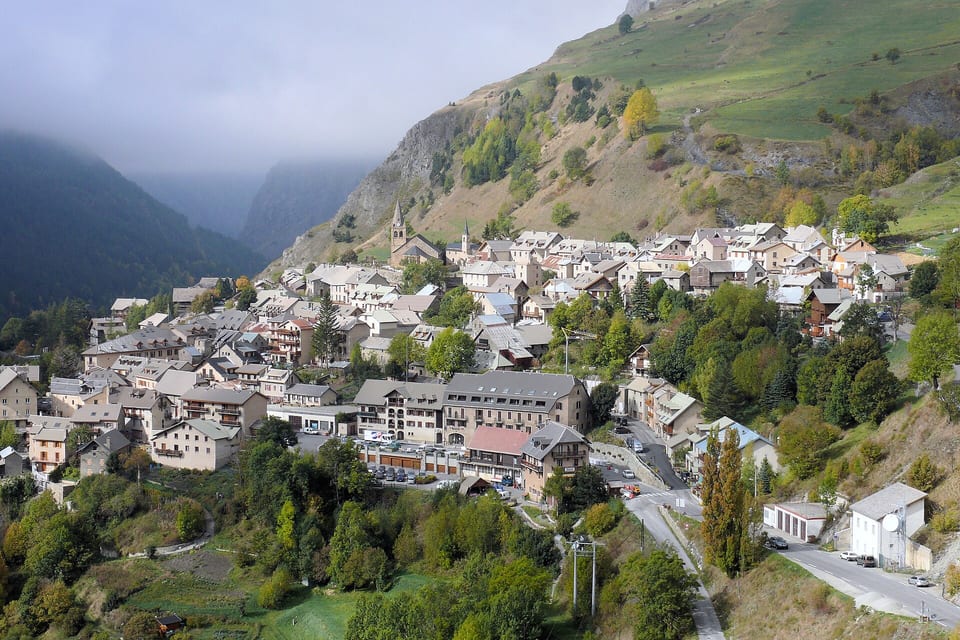
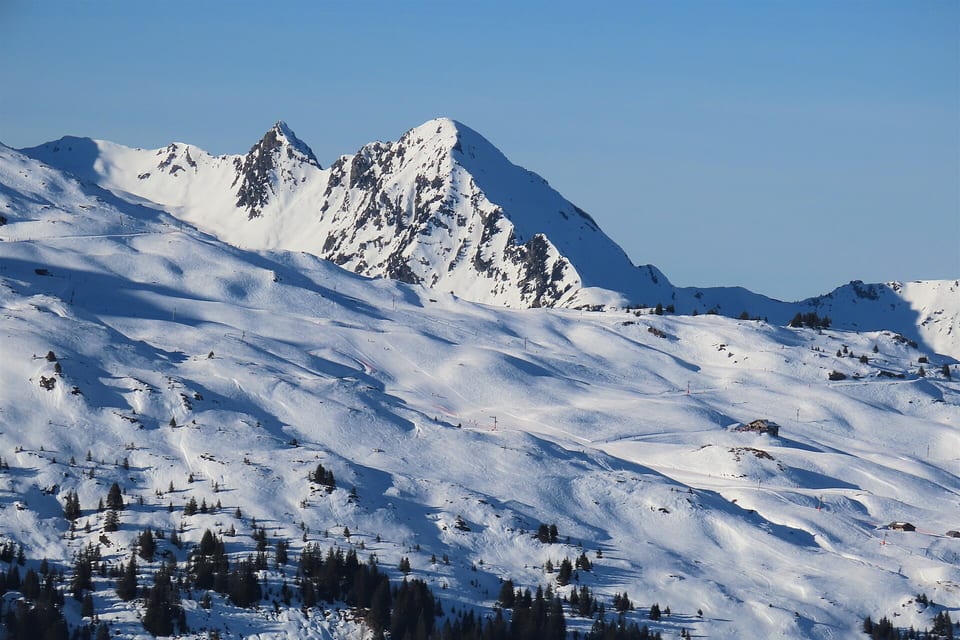
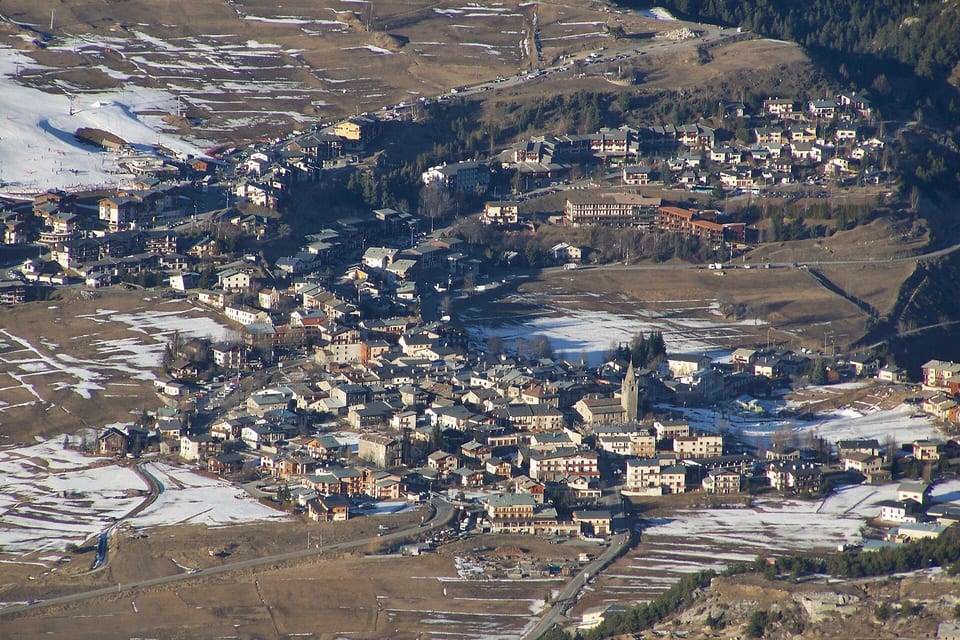
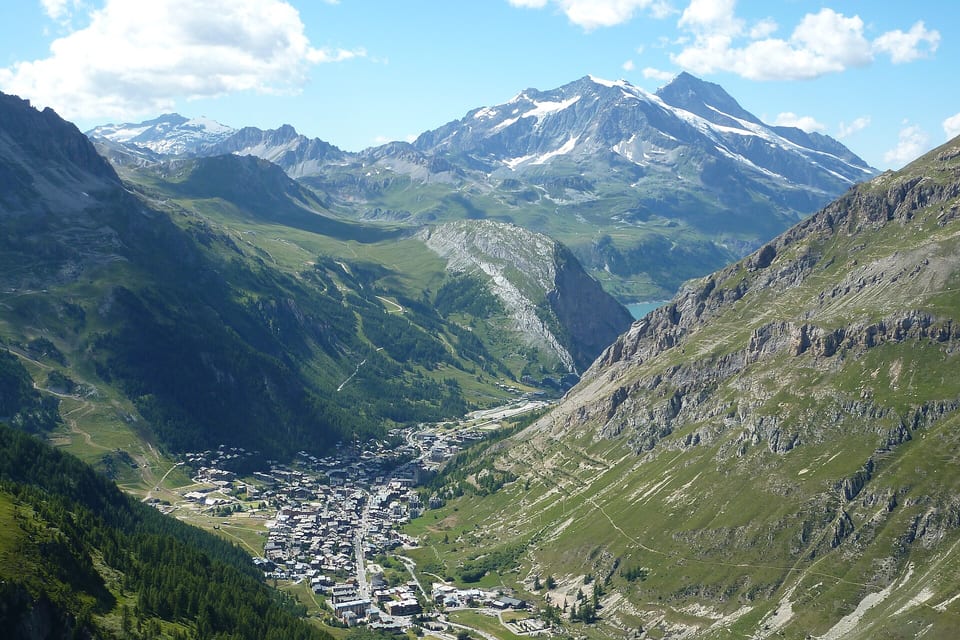
On a described route, in S2, with someone. Our pages list for each resort the routes described within ten kilometres: summit, vertical, ski grade, exposure, aspect, and the link to the full description. In the Haute-Maurienne — Val Cenis, Bonneval-sur-Arc, Aussois — the terrain is vast and regular; in the Queyras — Abriès, Saint-Véran — the slopes are gentle and the valleys quiet; the Beaufortain — Arêches — is the classic learning ground of the Savoyards.
Never alone, never without the bulletin. A beginner reads the avalanche bulletin for the range the day before, and turns back above danger level 2 — not because 3 is forbidden, but because they cannot yet recognise the slopes the bulletin points to.
The table below ranks resorts by number of ski touring routes described nearby.