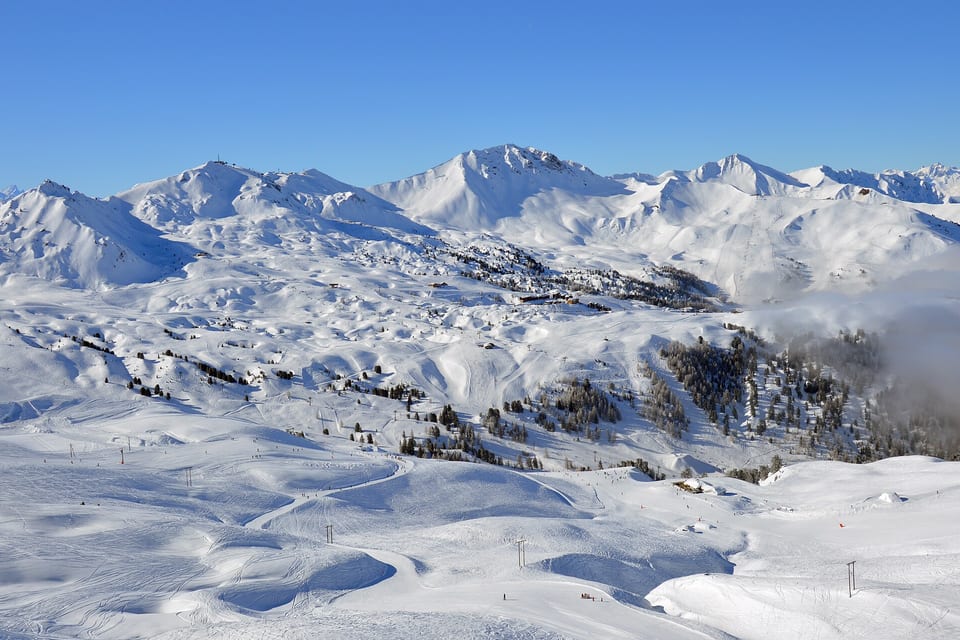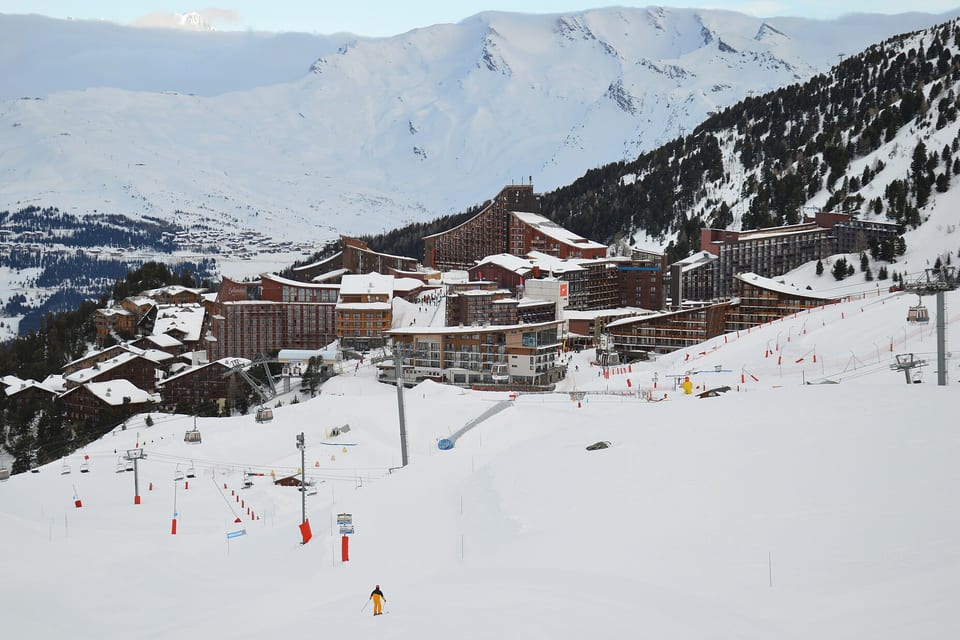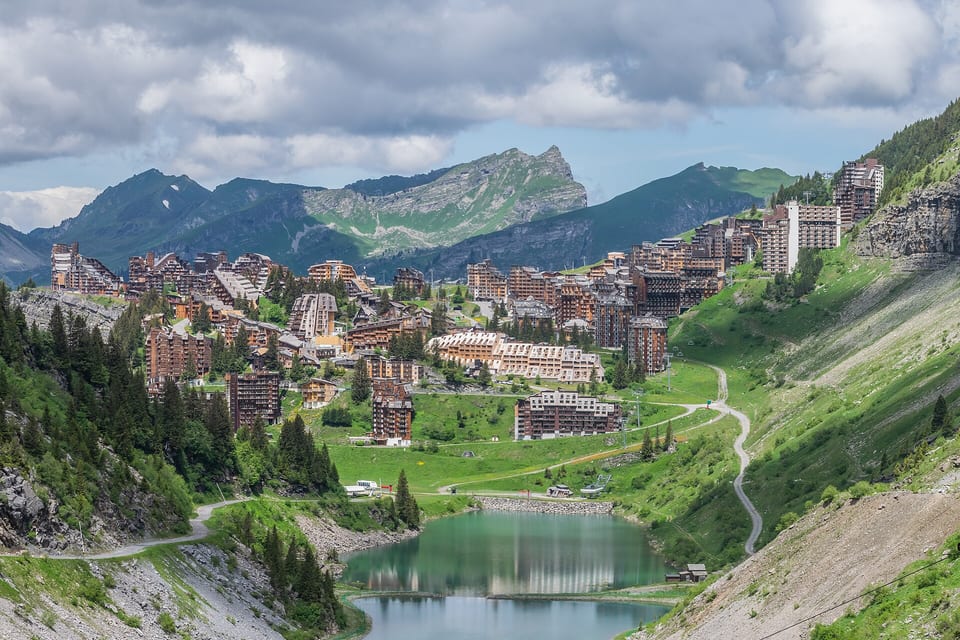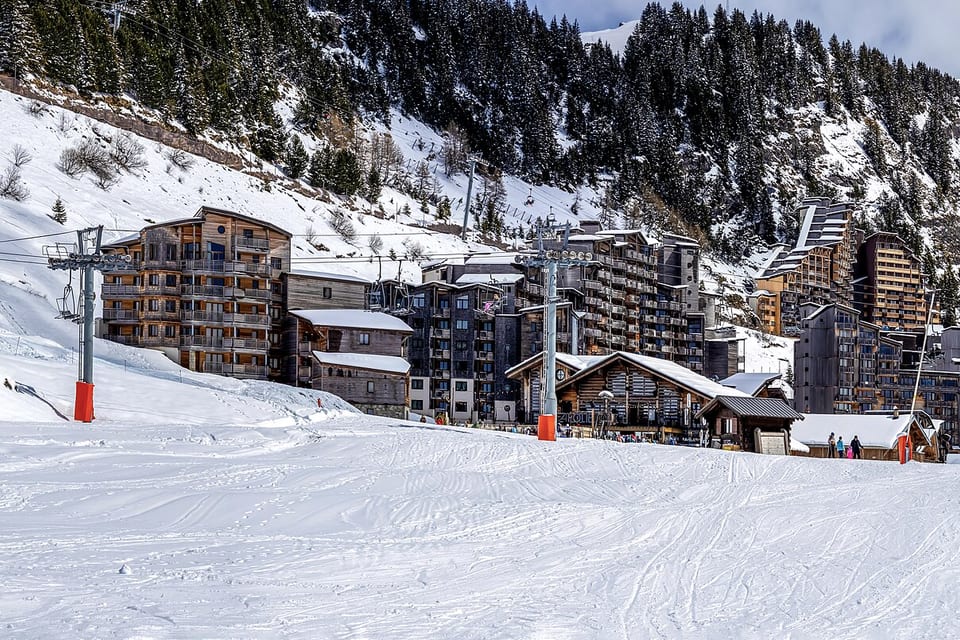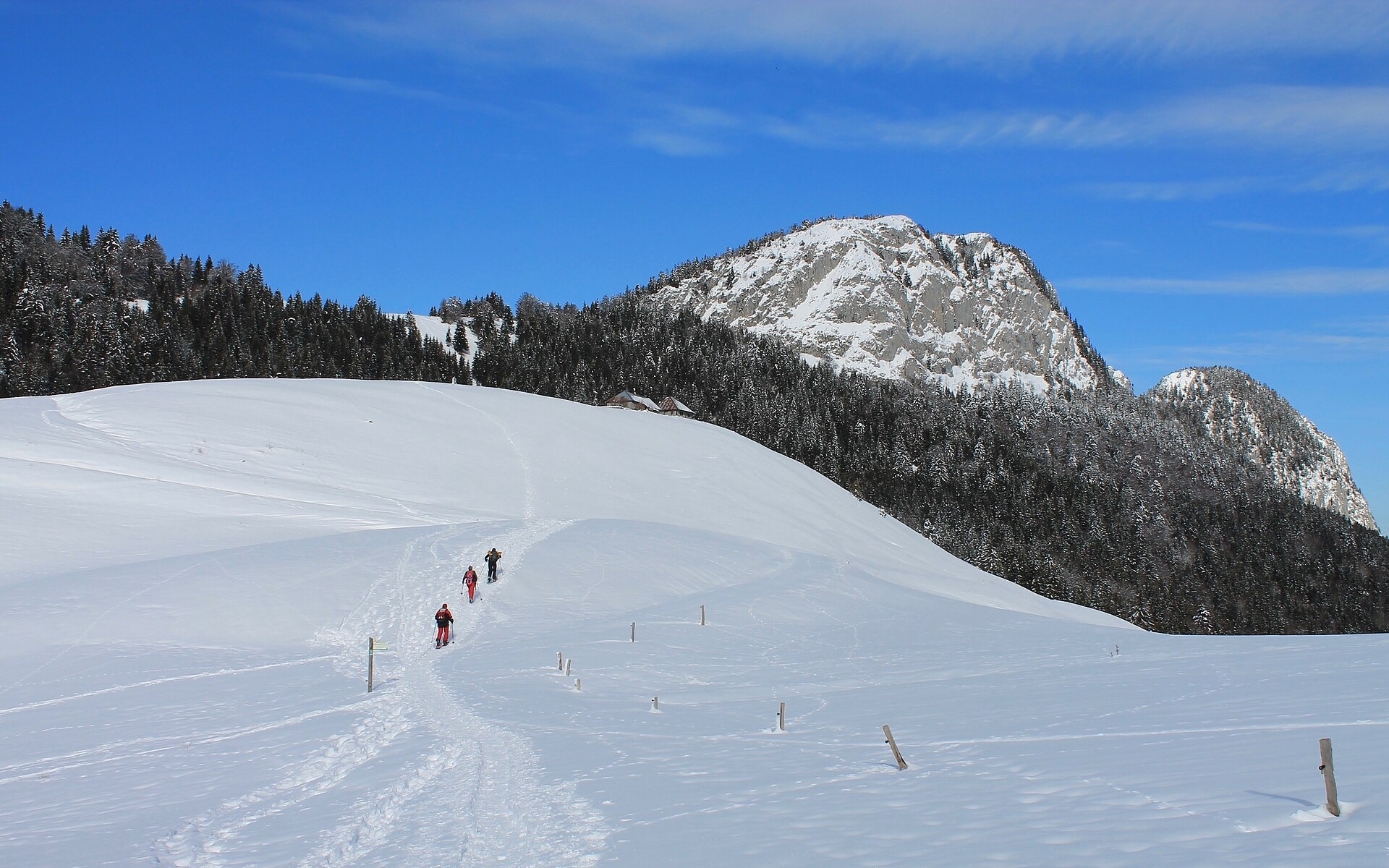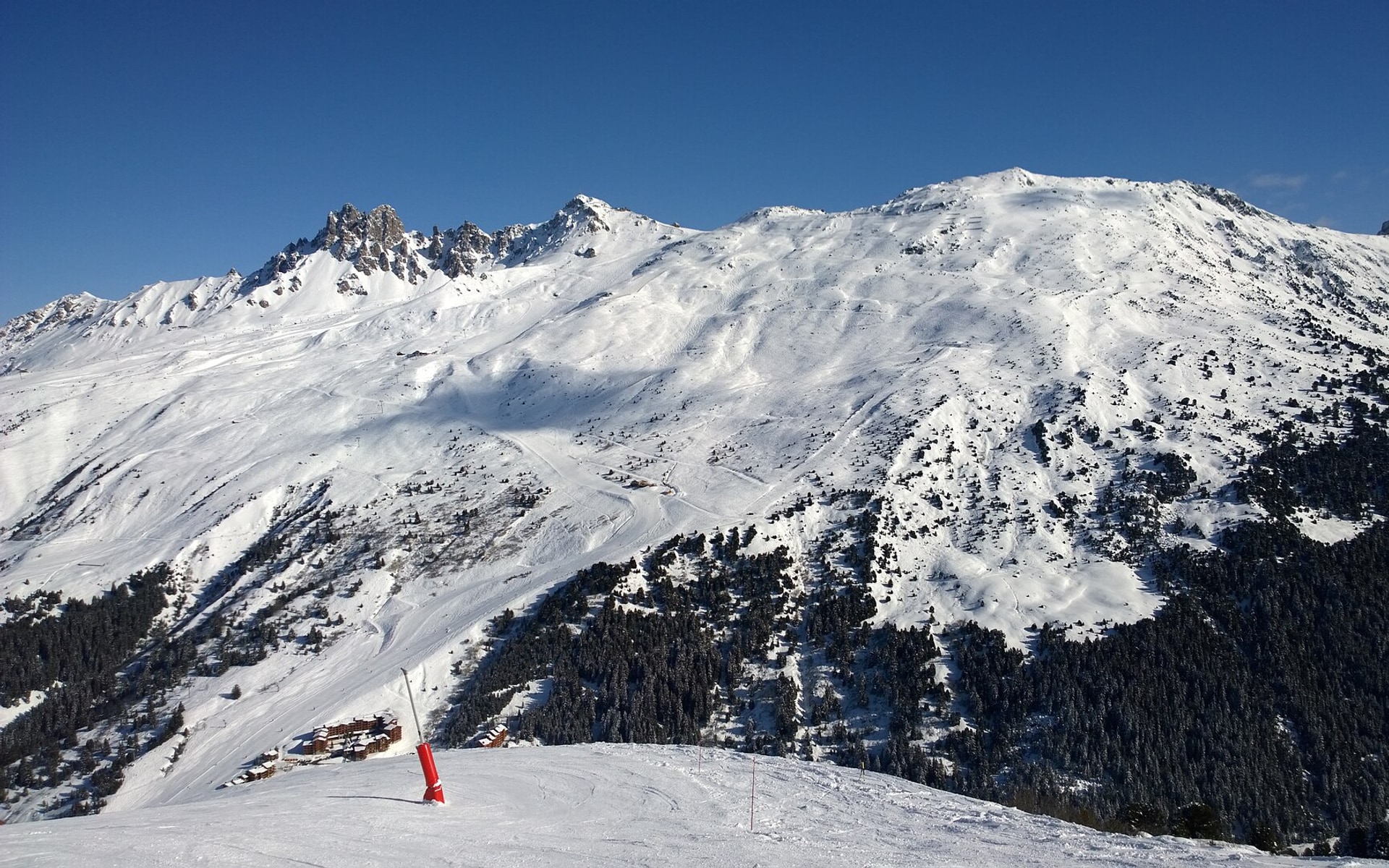
The big linked ski areas are the selling point of the French Alps, and the figure that sums them up — kilometres of pistes — is both true and misleading. True, because it measures a real offer. Misleading, because it says nothing about what you ski from the resort where you sleep, nor the time spent on links, nor the price.
This article compares the six big French areas with the data on our resort pages: kilometres, but also the number and age of the lifts, their capacity, the altitude, and the pass price.
The 3 Vallées: the biggest, the highest, the dearest
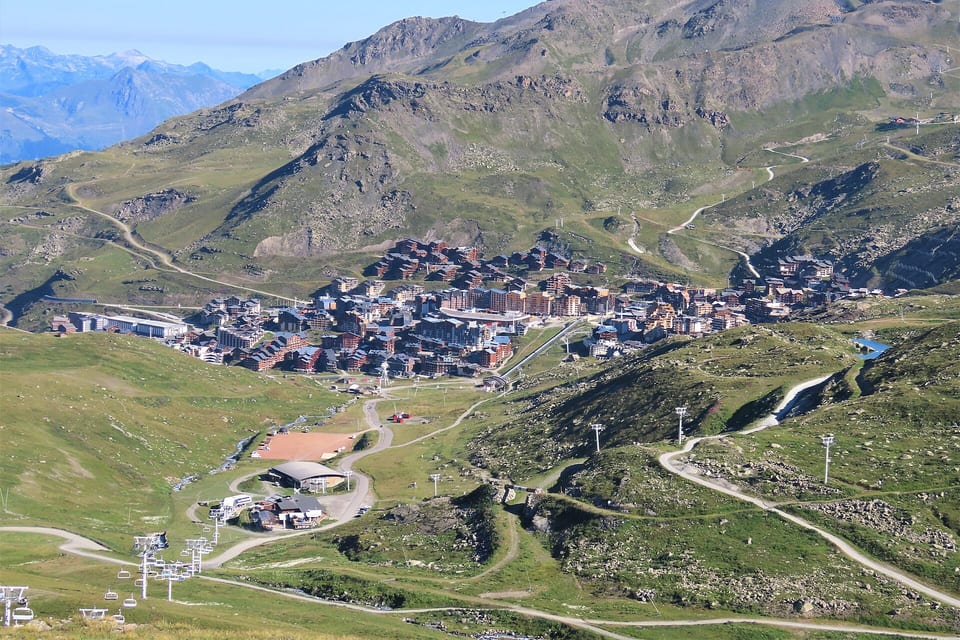
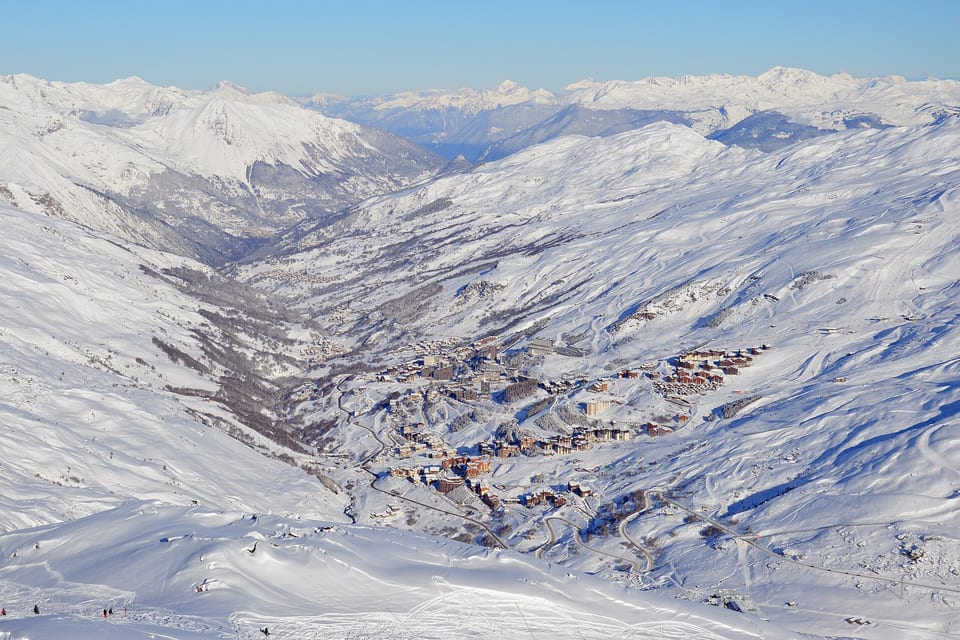
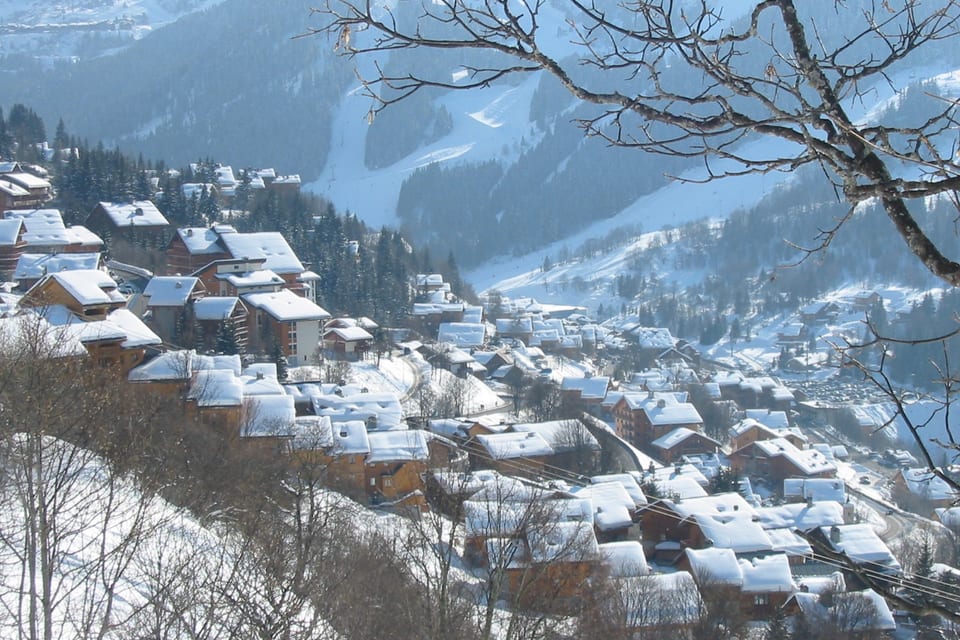
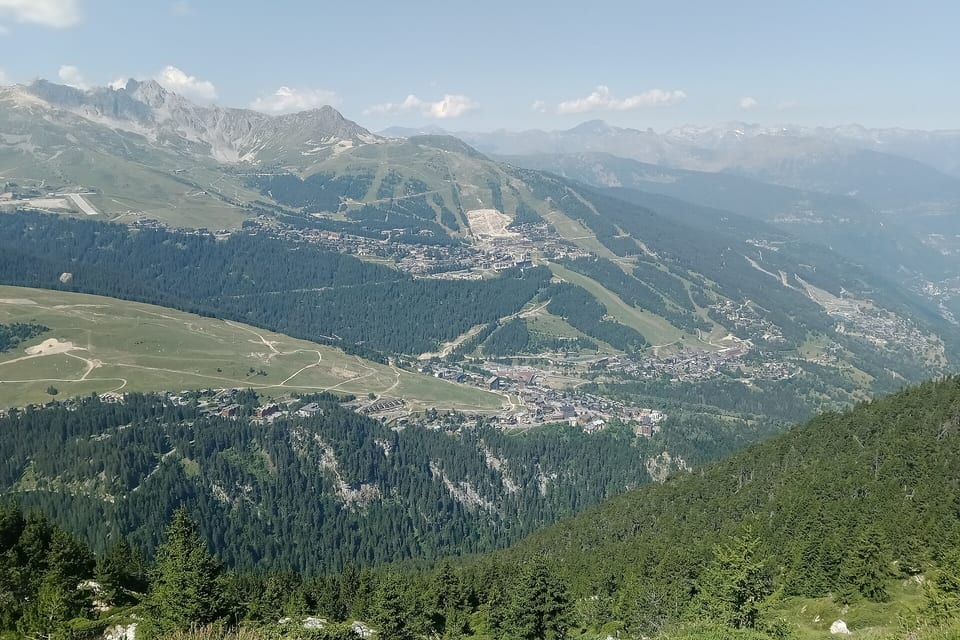
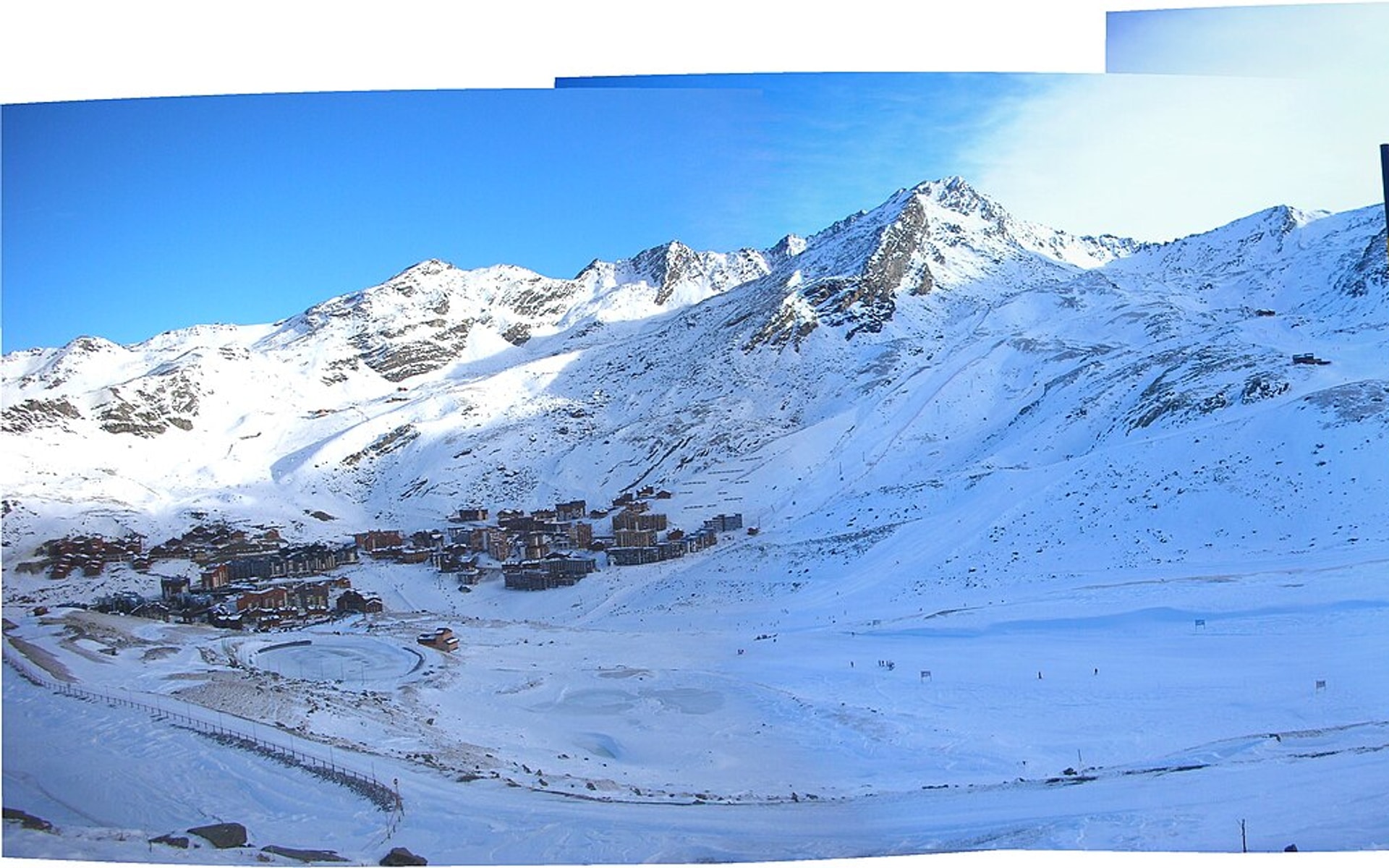
600 km of pistes claimed, from Courchevel to Orelle, with Méribel in the middle and Les Menuires and Val Thorens in the Belleville valley. It is the area where you can ski a week without repeating a run.
Its measured figures: Val Thorens counts 44 lifts on its page, including the Cime Caron cable car at 3,186 m; Courchevel, 66 lifts in the national register for a combined capacity of 81,749 people an hour, the second in France behind La Plagne. It is an area that does not keep you waiting — at the price of its popularity.
The pass: €70 a day at Les Menuires for the whole 3 Vallées in 2026-2027, six days at €350. The “valley” pass costs about ten euros less.
For whom: skiers who want variety and altitude and accept paying for both. Beginners are better off sleeping at Les Menuires or Méribel than at Courchevel 1850, dearer for identical skiing.
Paradiski: La Plagne and Les Arcs, linked by the Vanoise Express
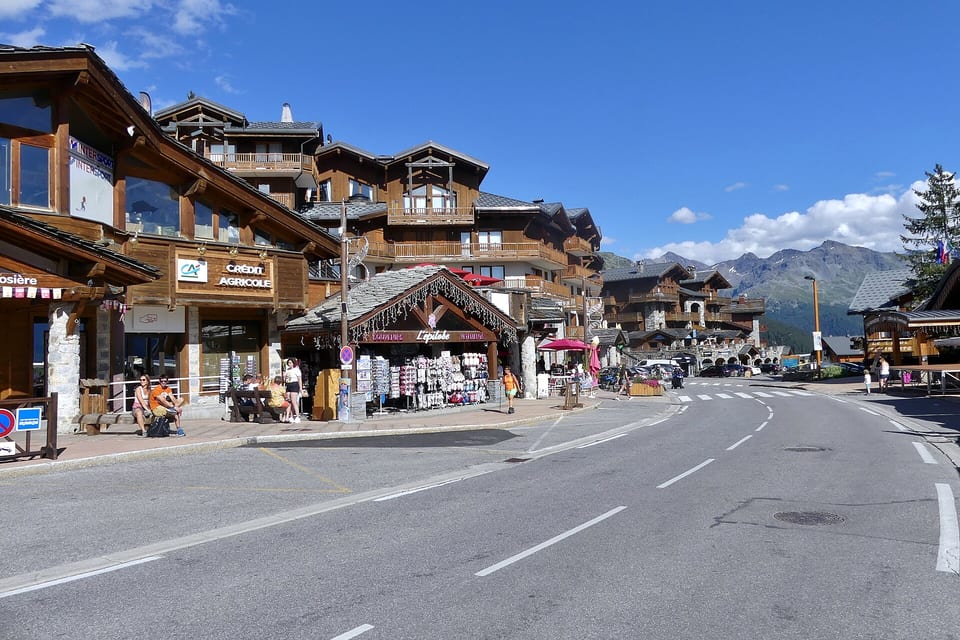
425 km claimed, between the eleven villages of La Plagne and the four levels of Les Arcs, linked since 2003 by a double-decker cable car across the valley.
La Plagne has the most powerful lift system in France: 109 lifts, 149,594 people an hour in the register — almost double Courchevel. Les Arcs climb to 3,166 m at the Aiguille Rouge, with one of the biggest descents in France down to Villaroger.
The pass: €76 a day at Arc 1950 for the whole of Paradiski, €401 for six days. La Plagne alone is cheaper.
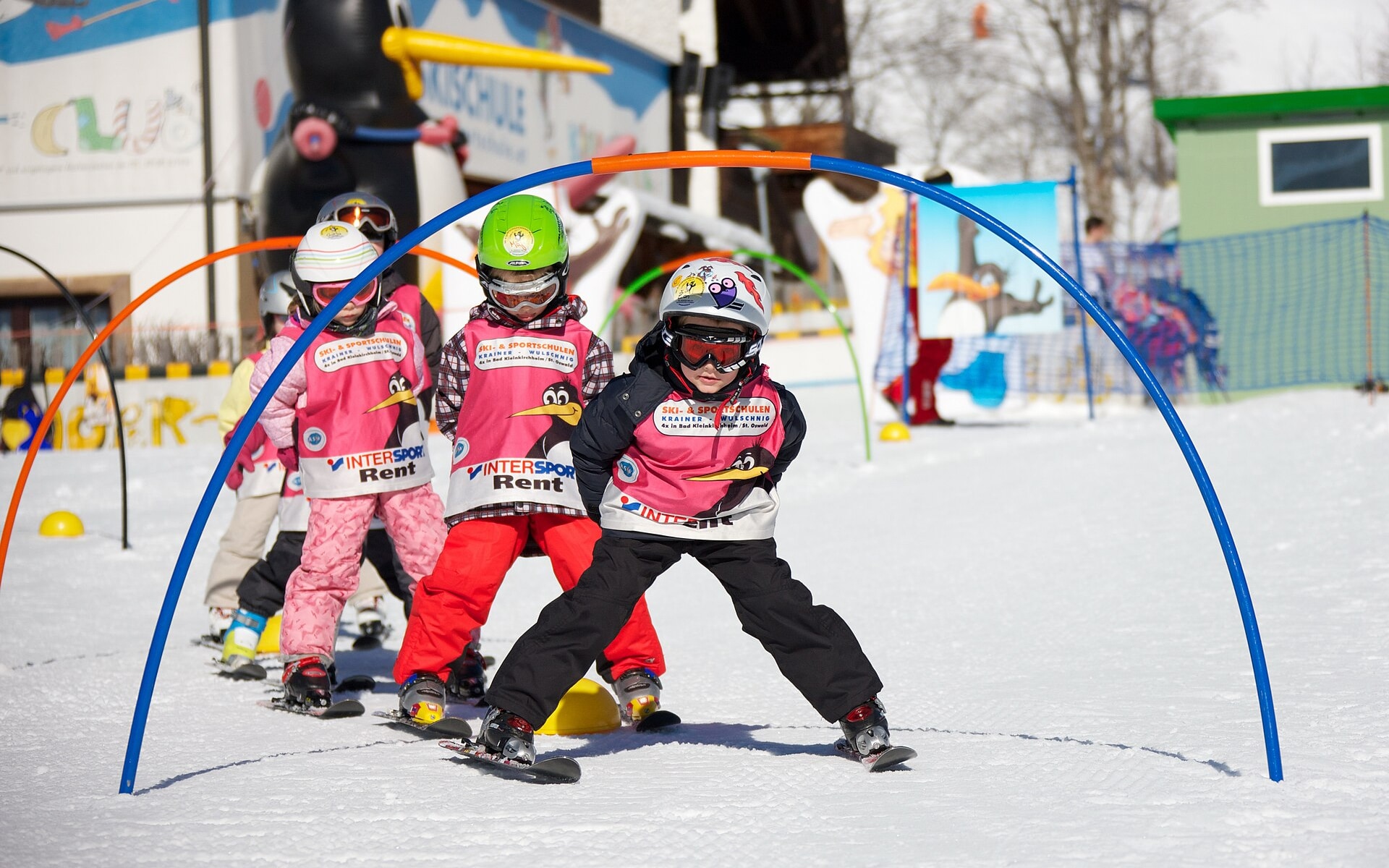
For whom: families — La Plagne is the archetype of the ski-in ski-out resort — and skiers who want vertical without going as far as Tignes. Belle Plagne, at 2,050 m, is the best compromise of altitude, price and access.
Portes du Soleil: twelve resorts, two countries
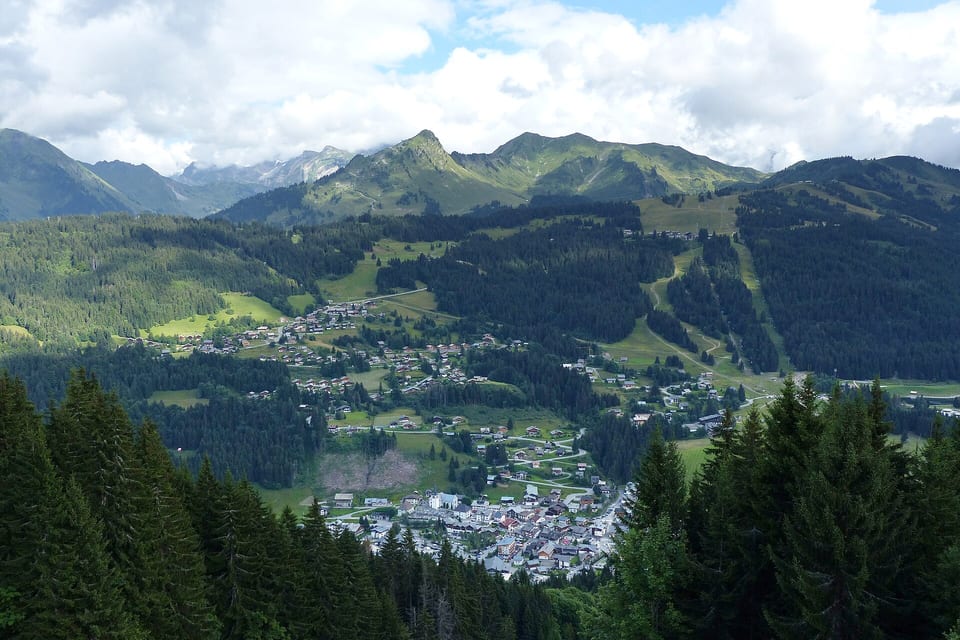
600 km claimed between Avoriaz, Morzine, Les Gets, Châtel and the Swiss resorts of Champéry and Morgins. A low area — Morzine is at 1,000 m, Les Gets at 1,170 — except Avoriaz, at 1,800 m, which is its high-altitude heart.
What sets it apart: forest and villages. Les Gets have the oldest lift fleet on the list — first installation in 1945, an average age of 38 years across 30 lifts — and one of the most intact charms. Avoriaz, car-free, is the opposite: built in one go in the 1960s, entirely pedestrian.
The pass had not been published for 2026-2027 at the time of reading; the pages will update.
For whom: skiers who prefer a village to a snow front, and accept less certain snow low down at either end of the season — our Météo-France records, resort by resort, say how many days the snow lies at Morzine and Les Gets.
Grand Massif: Flaine and the Giffre villages
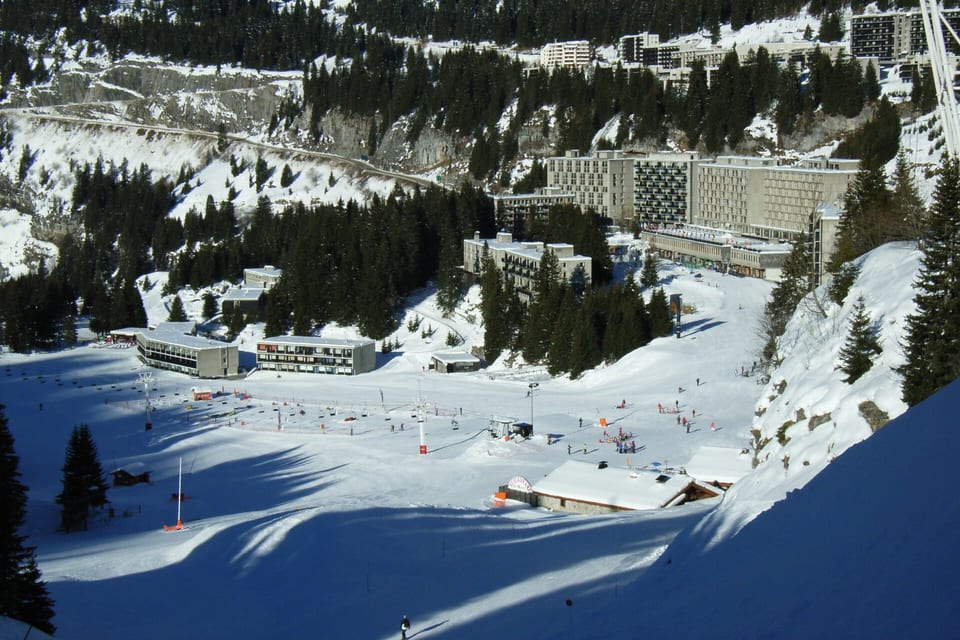
265 km claimed between Flaine, Les Carroz, Samoëns, Morillon and Sixt. Flaine, built in a cirque at 1,600 m, holds its snow well; the villages below are at 700-1,100 m.
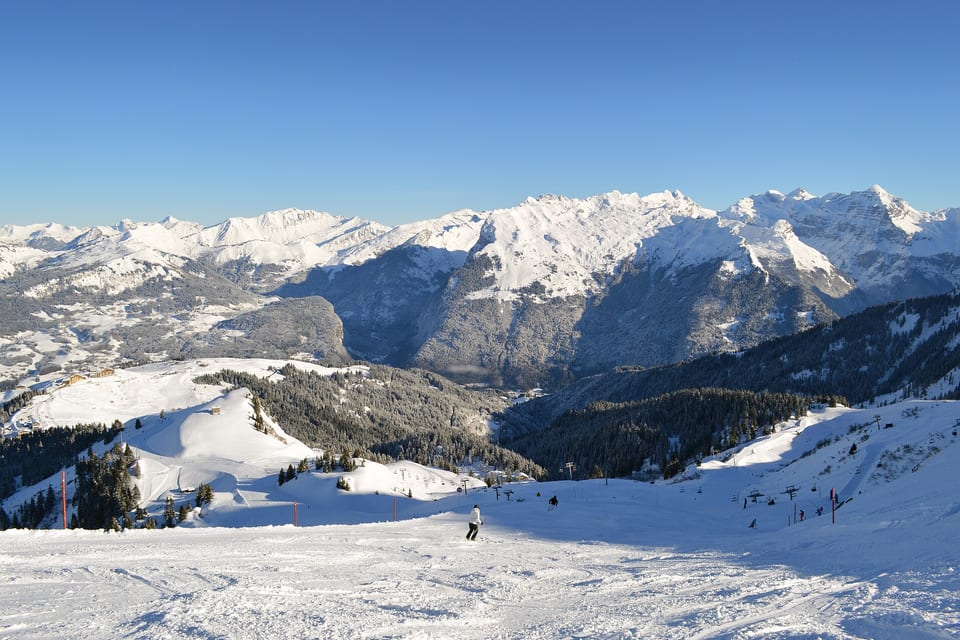
This area has the longest run in France under a single name, the Cascades, 10.5 km and 1,594 m of vertical from the top of the Grandes Platières down to Sixt. The Météo-France station at Flaine measures 532 cm of snowfall a winter on average, over ten complete winters.
The pass: €63 a day on the whole area, €378 for six days from Samoëns or Morillon.
For whom: families and intermediate skiers — the area is wide, not steep, and Flaine is entirely pedestrian at the foot of the runs.
Espace Killy: Tignes and Val-d’Isère
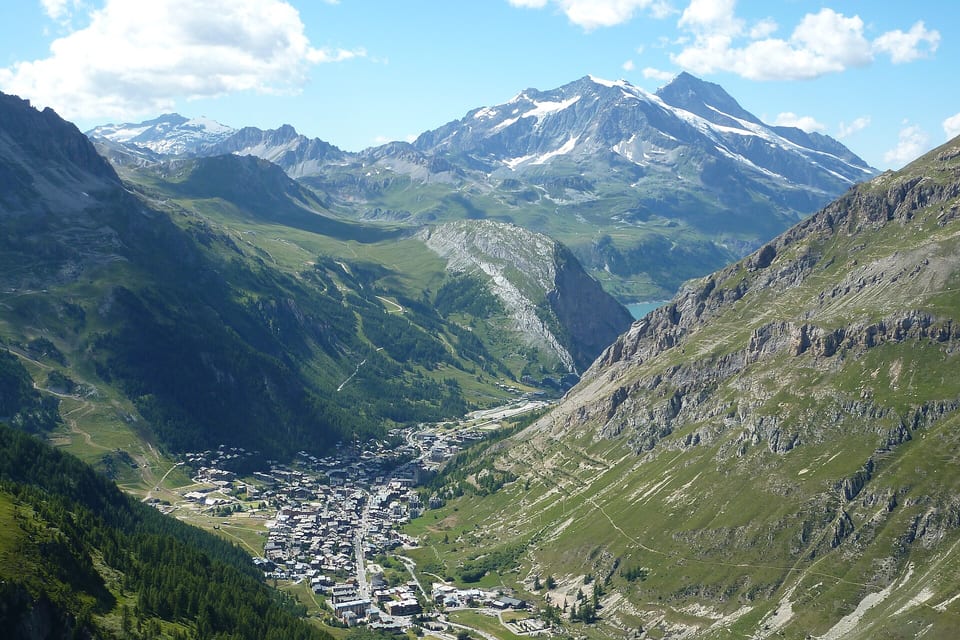
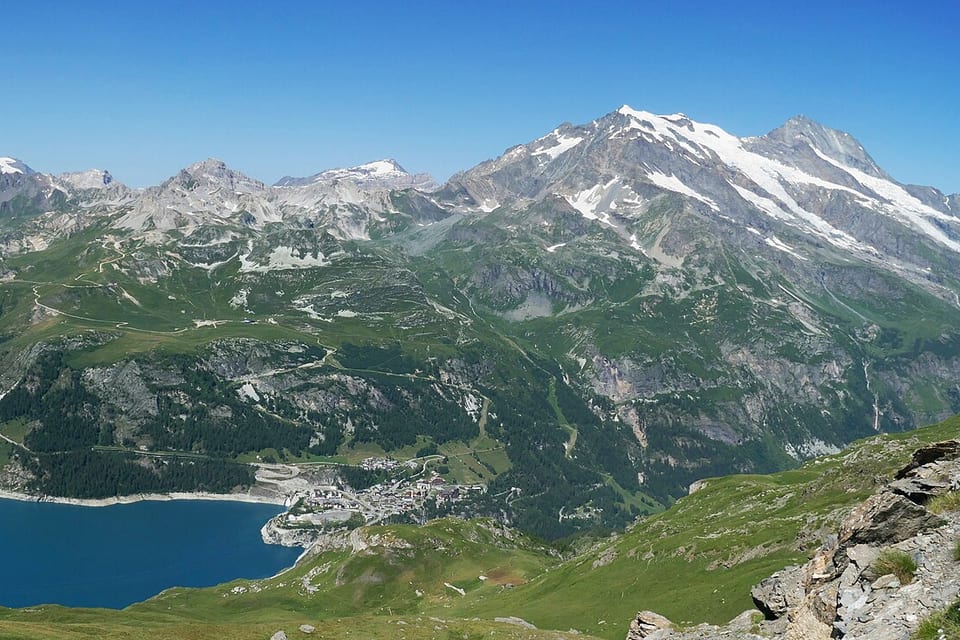
300 km claimed, and above all altitude: Tignes sleeps at 2,100 m, Val-d’Isère at 1,850, and the area climbs to 3,455 m at the Grande Motte, whose cable car arrives at 3,451 m — the highest skiable point in France in winter. The Météo-France station at Tignes measures 131 days a winter with 30 cm or more on the ground.
The pass is the dearest in France: €78 a day, €468 for six days.
For whom: confirmed skiers and those who want certainty of snow from November to May. Beginners too, at Tignes le Lac, where the snow front is flat and wide — but at that price.
What this comparison does not measure
Charm, food, après-ski, the view: no data measures them and we do not invent them. What it does measure — kilometres, lifts, capacity, altitude, price — decides a successful ski week more often than you would think. The table below ranks every big area in France, one line per linked area.